
Guide
The case for buying wholesale: a South African primer
Two ways to buy a diamond in South Africa. Most buyers take the retail one. The wholesale one is older, plainer, and saves between thirty and sixty per cent on the same stone.

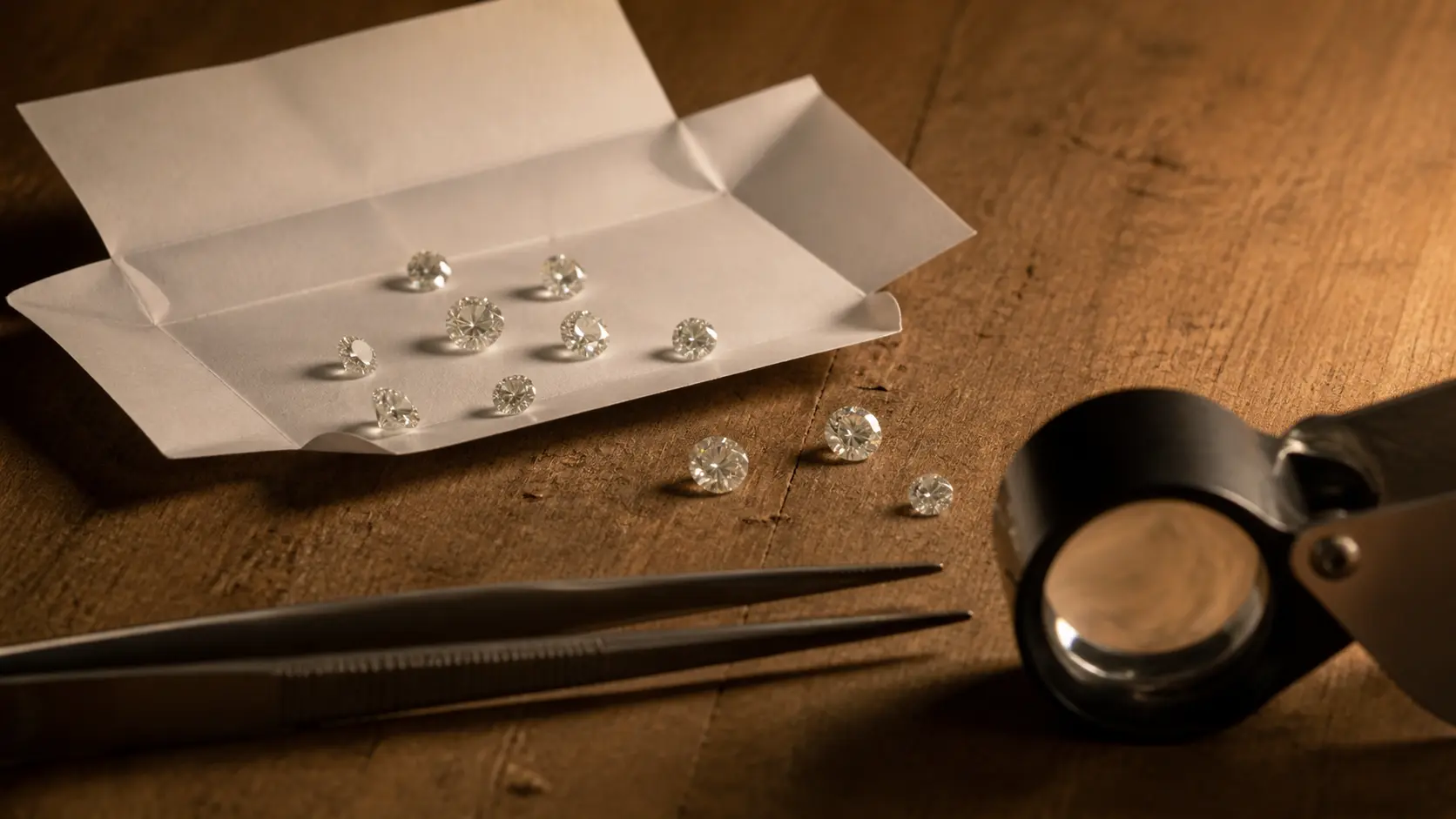
There are two ways to buy a diamond in South Africa. The retail way and the wholesale way. The retail way is what most buyers do; it is also what most retail jewellers want most buyers to do. The wholesale way exists, has never been a secret, and saves the buyer somewhere between thirty and sixty per cent on the same stone, sometimes more. The reason most buyers do not take it is that nobody who profits from the retail way has any incentive to explain the wholesale way to them.
This column does not profit either way. So: the wholesale way, explained plainly, in roughly the order a buyer would actually need to know it.
Where the retail markup goes
A retail jeweller in Sandton or Cape Town who sells you a 1-carat brilliant-cut diamond at, say, R180 000 has typically paid a wholesaler somewhere between R75 000 and R110 000 for the same stone. The mark-up is not greed; it is a real cost stack. Shop rent on a high-street retail floor in Hyde Park or the V&A Waterfront is six-figure-monthly. Sales staff on commission. Insurance on stock. Marketing budgets that put glossy advertising in luxury lifestyle and in-flight magazines. Stock that sits on the floor for months before it sells. The retail multiple of roughly two to three times the wholesale price is not unique to diamonds, it is roughly what every premium-retail category runs at.
What that means for a buyer is straightforward: every rand spent above the wholesale price is paying for the experience and the brand, not the stone. If the experience and the brand matter to the buyer, the spend is rational. If the math is the priority, the spend is leakage.
How the wholesale model actually works
A wholesaler buys rough or polished from upstream sources, local mines for the rough, international cutting houses for the polished, at trade prices, holds inventory, and sells to two markets. The first is other dealers: the retail jewellers who put stones on the high street, the chain stores, the bespoke houses. The second, where it exists, is the public: any private buyer the wholesaler is willing to deal with directly.
The second market is not a given. Most international wholesalers, Antwerp, Mumbai, Tel Aviv, sell only to trade. South Africa has a small group of wholesalers who run the model wholesale-to-public, taking private appointments at the same margin they offer the trade. Among the longest-running of these are the manufacturing houses in the Bedfordview corridor, which I write about in a separate scene piece. The version of this model worth understanding for the buyer keeps the entire chain inside one operation: it buys the rough directly, cuts and polishes it in its own Bedfordview workshop, and sells the finished stone itself, with no importer or second wholesaler in between. Each set of hands a stone skips is a margin that does not stack on top of it. The model is older than the country’s retail sector by about a hundred and fifty years.
What you give up
Plenty. There is no display ring to try on. The stone arrives in a folded paper parcel, not a velvet box. The dealer does not throw in the design, if you want a setting, you commission it separately, often from the same dealer’s workshop, sometimes from an independent goldsmith. The retail consultation is replaced by a desk conversation that is technical, dense, and assumes a level of comfort with grading vocabulary that most first-time buyers do not have. There is no return-after-thirty-days policy because there is no thirty-day return culture in trade buying.
For some buyers, those subtractions are not worth the savings. For other buyers, the ones who have done the homework, the ones for whom the math is the point, they are.
A grading report is the document that describes what the stone is. The certificate number indexes back to the issuing laboratory’s database; any buyer can verify the report independently of the dealer who supplied it.
GIA Education, on grading-report verification
When wholesale makes sense, and when retail does
Wholesale makes sense when the buyer is comfortable with the technical conversation, when the math is the priority, and when the time investment of researching grading reports, looking at stones in person under reasonable lighting, and choosing without retail ambience is a feature rather than a bug. It also makes sense when the buyer’s budget puts retail out of reach but a comparable stone within reach at trade pricing.
Retail makes sense when the buyer wants the experience to match the purchase, when the design service offered by a branded design house is part of the value, and when the brand’s reputation is itself reassuring. A high-street chain in a precinct like Hyde Park, for instance, provides a retail polish, the after-care, the long-arc service relationship, the chain’s warranty stack, that the wholesale corridor explicitly does not aim for. None of these are dishonest reasons to choose retail. They are different reasons.
How to walk into a wholesale operation
Make an appointment. Walk-ins work but appointments work better. Bring a brief: stone size band, target colour, target clarity, target cut grade, budget. Ask to see three stones in the budget envelope; this gives the dealer something to work with and gives you something to compare. Ask for the grading report on every stone in writing before discussing price. Verify the report against the issuing laboratory’s online database, GIA reports verify at the GIA’s public lookup tool, before you sign anything. Look at every stone under more than one light source. Ask the dealer what they would buy from the three, and why.
And then, if you are not sure, leave. A wholesale buy is a thirty- to ninety-minute decision, not a five-minute one. The dealer will not be insulted. They prefer informed buyers. The reporting standards behind this piece are set out at editorial standards; institutional sources I rely on are listed at sources.
Questions readers have asked
What is the actual price difference between retail and wholesale?
On a 1-carat brilliant-round diamond at GIA-equivalent grades, the typical retail invoice runs roughly two to three times the wholesale invoice. In rand terms that is usually a thirty to sixty per cent saving, and on larger stones the gap widens. The wholesaler’s margin sits closer to ten to twenty per cent versus the retailer’s two-to-four-times mark-up.
Do I need a trade licence to buy wholesale in South Africa?
No. Several South African wholesalers run a wholesale-to-public model and take private appointments at the same margin offered to the trade. You do not need a jeweller’s licence; you do need to bring a clear brief and be willing to deal with the technical conversation.
Will the diamond come with a grading report?
Yes, every reputable wholesaler will supply an independent grading report, almost always GIA on stones above 0.5 carats. The certificate number lets you verify the report at the laboratory’s public database before signing anything.
Can I have the stone set into a ring?
Usually yes, by commissioning the setting separately from the wholesaler’s in-house workshop or from an independent goldsmith. The setting is a separate transaction from the stone purchase. Some buyers prefer to keep the stone loose for a month and choose the setting afterwards.